


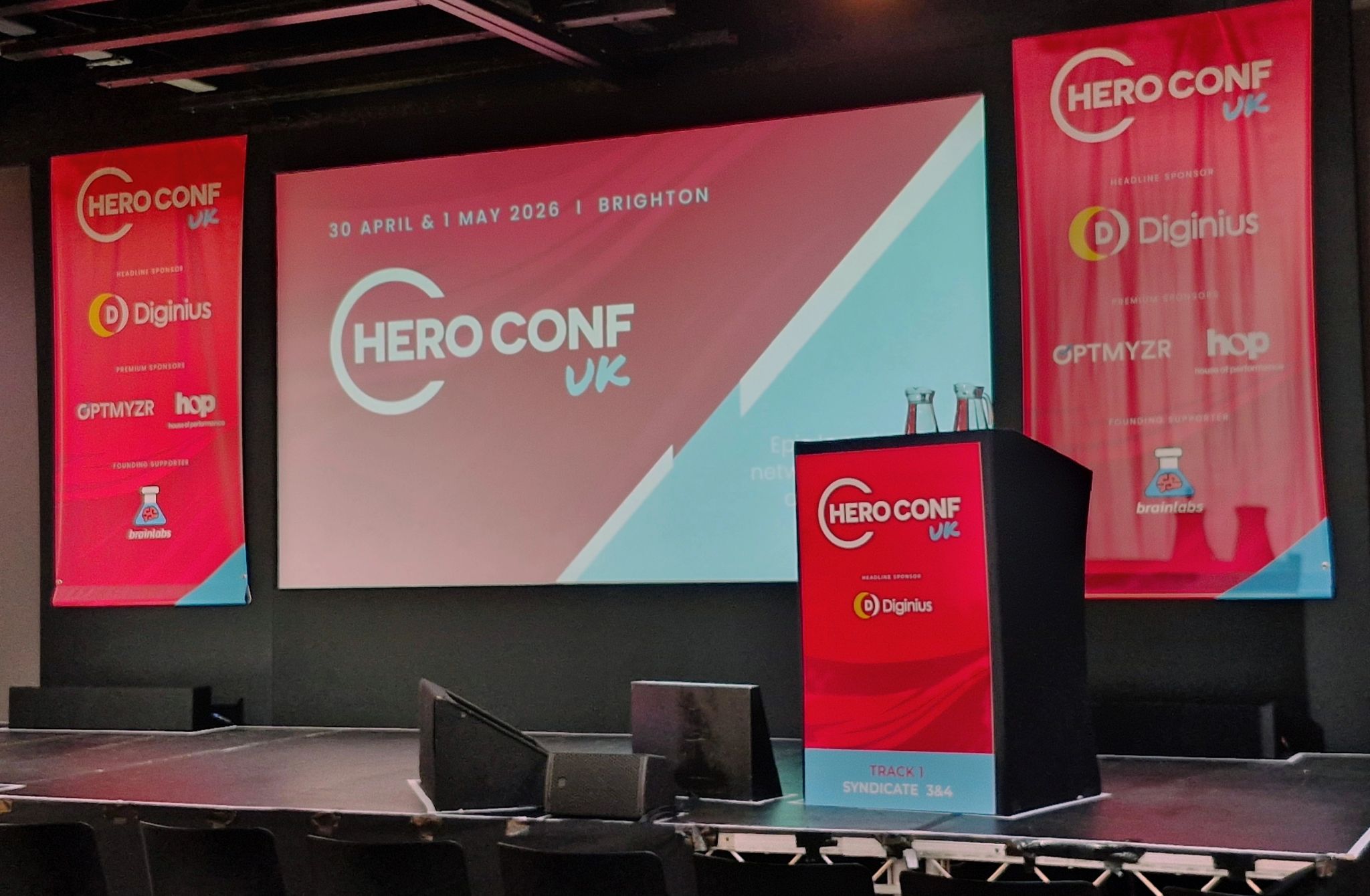
Precisionly founder Dez Calton recently spoke at Hero Conf UK, part of BrightonSEO, on a topic that often receives far less attention than it deserves: proactively managing negative keywords and the impact this can have on PPC efficiency.
Negative keywords are not new. Most PPC advertisers know they matter. The challenge is that many accounts still treat them as reactive housekeeping rather than an ongoing efficiency strategy. That difference can become expensive.
Negative keyword match types function differently compared to their positive keyword match type companions. Check out this blog post all about how negative keyword match types work.
Efficiency is a recurring theme throughout PPC because small inefficiencies compound over time. A few irrelevant clicks here, some poor search term matching there and a little wasted spend across campaigns can eventually become a meaningful drag on growth.
The impact is often larger than simply wasted budget. Lower relevance can affect cost per click, conversion rates and lead quality. Confidence in performance can drop, scaling becomes more difficult and opportunities that should have received budget never get the chance.
The session explored why this challenge has become more important in recent years, the hidden impact broader matching and limited search term visibility can create and practical approaches advertisers can use to proactively improve efficiency.
The full presentation can be viewed here, alongside additional context and practical examples that expand beyond the slides themselves.
Negative keywords are not new. Most PPC advertisers know they matter. The challenge is that many accounts still treat them as reactive housekeeping rather than an ongoing efficiency strategy. That difference can become expensive.
Negative keyword match types function differently compared to their positive keyword match type companions. Check out this blog post all about how negative keyword match types work.
Efficiency is a recurring theme throughout PPC because small inefficiencies compound over time. A few irrelevant clicks here, some poor search term matching there and a little wasted spend across campaigns can eventually become a meaningful drag on growth.
The impact is often larger than simply wasted budget. Lower relevance can affect cost per click, conversion rates and lead quality. Confidence in performance can drop, scaling becomes more difficult and opportunities that should have received budget never get the chance.
The session explored why this challenge has become more important in recent years, the hidden impact broader matching and limited search term visibility can create and practical approaches advertisers can use to proactively improve efficiency.
The full presentation can be viewed here, alongside additional context and practical examples that expand beyond the slides themselves.
The Hidden Cost of PPC Inefficiency
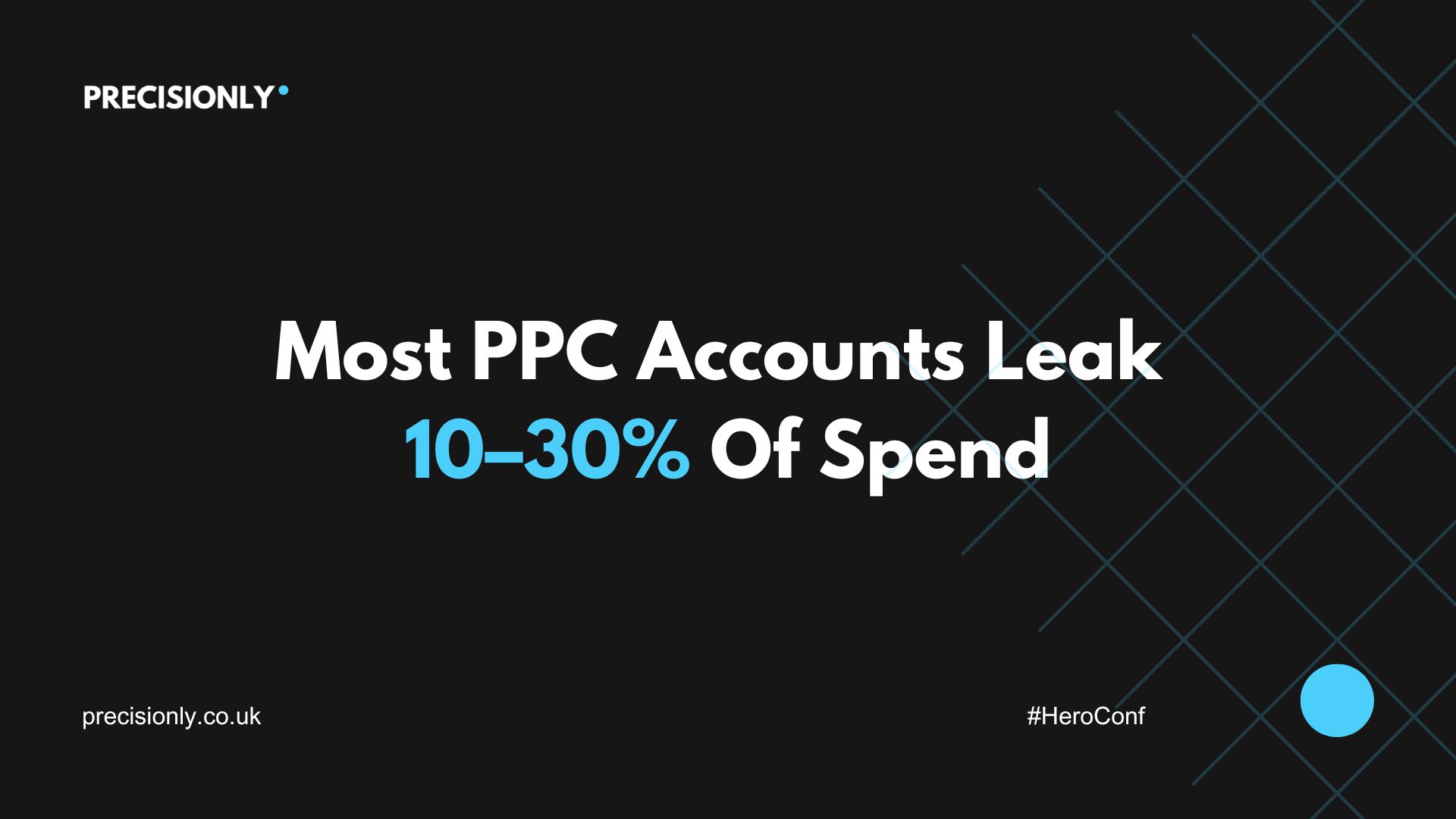
Most advertisers do not wake up one morning and discover that half their PPC budget has disappeared. The reality is usually much less dramatic and far more difficult to identify.
Small inefficiencies often creep into accounts over time. A few irrelevant searches here, a handful of broad matches there and some search intent drift across campaigns can slowly build into something much larger.
That is one of the reasons efficiency is a recurring theme throughout our work at Precisionly. Small inefficiencies compound and so do small improvements.
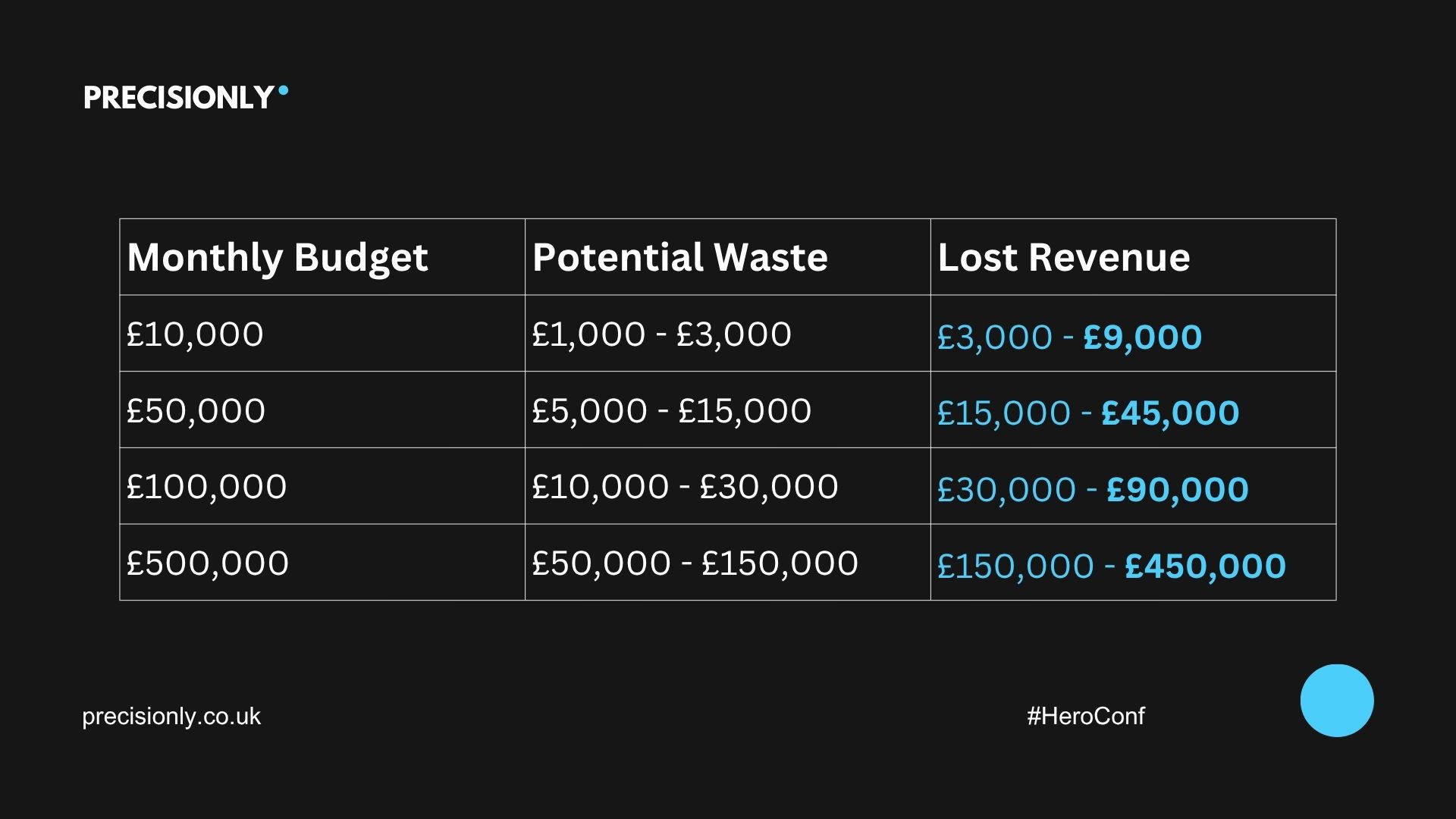
If an account spending £50,000 per month loses even 10% of its spend through poor relevance, weak intent matching or avoidable clicks, that equates to £5,000 every month. Over a year that becomes £60,000 that could potentially have been redirected towards stronger opportunities. The impact also extends beyond spend itself.
Lower relevance can increase cost per click, reduce conversion rates and ultimately make scaling harder because confidence in the account starts to drop.
Small inefficiencies often creep into accounts over time. A few irrelevant searches here, a handful of broad matches there and some search intent drift across campaigns can slowly build into something much larger.
That is one of the reasons efficiency is a recurring theme throughout our work at Precisionly. Small inefficiencies compound and so do small improvements.
If an account spending £50,000 per month loses even 10% of its spend through poor relevance, weak intent matching or avoidable clicks, that equates to £5,000 every month. Over a year that becomes £60,000 that could potentially have been redirected towards stronger opportunities. The impact also extends beyond spend itself.
Lower relevance can increase cost per click, reduce conversion rates and ultimately make scaling harder because confidence in the account starts to drop.
Think your PPC performance has plateaued?
A PPC audit can often identify where efficiency is being lost before scaling becomes expensive.
Why Negative Keywords Matter More Now Than Ever
Negative keywords have always mattered, but the environment around them has changed significantly.
Historically, advertisers had tighter control over the relationship between keywords and the searches that triggered ads. Exact match behaved more like exact match and phrase match followed much stricter rules.
Over time, Google’s interpretation of intent has expanded. Broad matching has become more aggressive, phrase match absorbed many former broad match modifier behaviours and automation now plays a larger role in campaign delivery.
Campaign types such as Performance Max and AI-driven campaign structures have increased this further. The upside is greater reach and additional opportunities. The challenge is maintaining control.
Without proactive negative keyword management, broader matching can gradually introduce searches that sit further away from commercial intent.
Historically, advertisers had tighter control over the relationship between keywords and the searches that triggered ads. Exact match behaved more like exact match and phrase match followed much stricter rules.
Over time, Google’s interpretation of intent has expanded. Broad matching has become more aggressive, phrase match absorbed many former broad match modifier behaviours and automation now plays a larger role in campaign delivery.
Campaign types such as Performance Max and AI-driven campaign structures have increased this further. The upside is greater reach and additional opportunities. The challenge is maintaining control.
Without proactive negative keyword management, broader matching can gradually introduce searches that sit further away from commercial intent.
The Hidden Search Term Problem
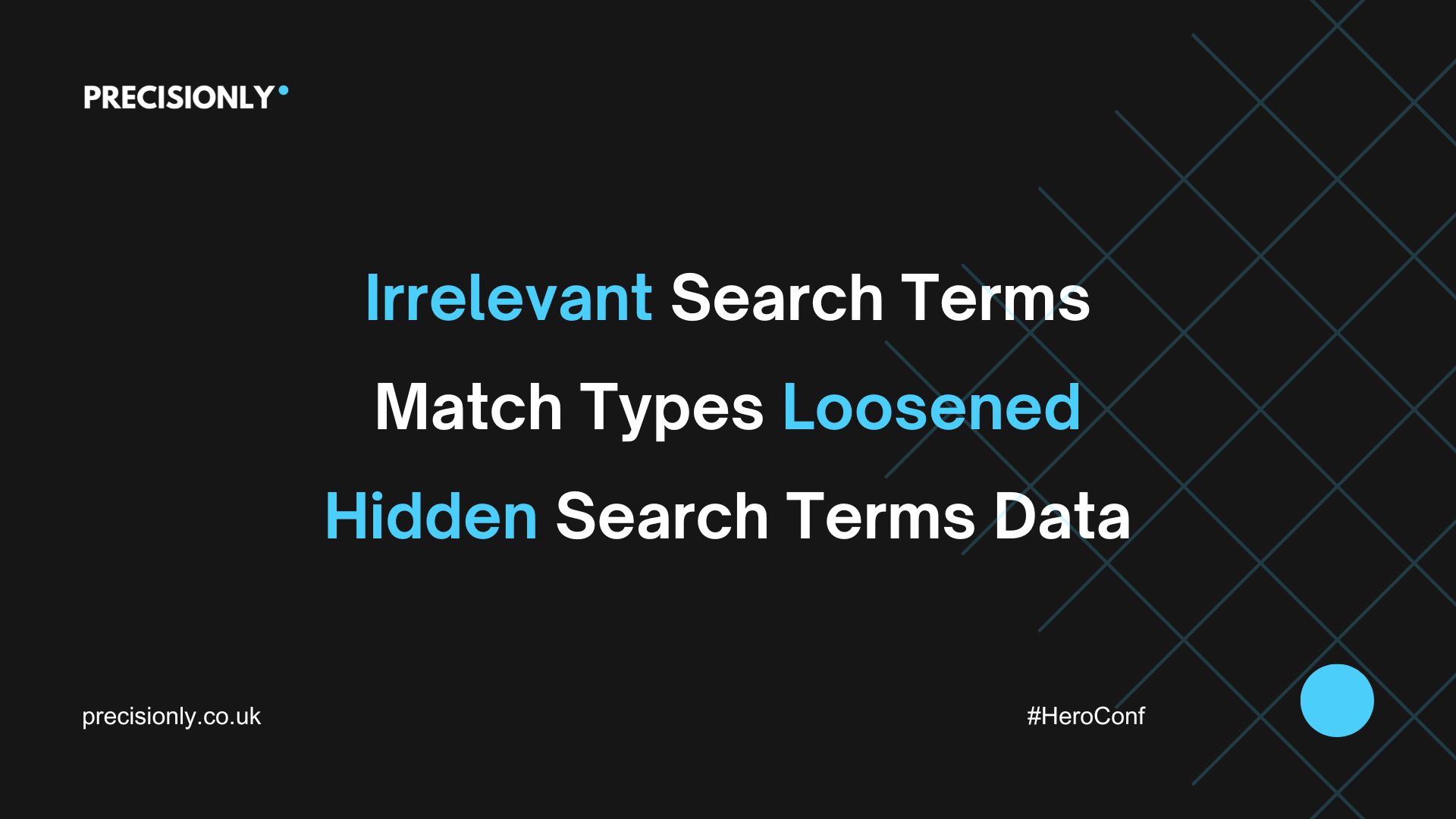
One of the more interesting discussion points during the presentation focused on visible versus hidden search terms.
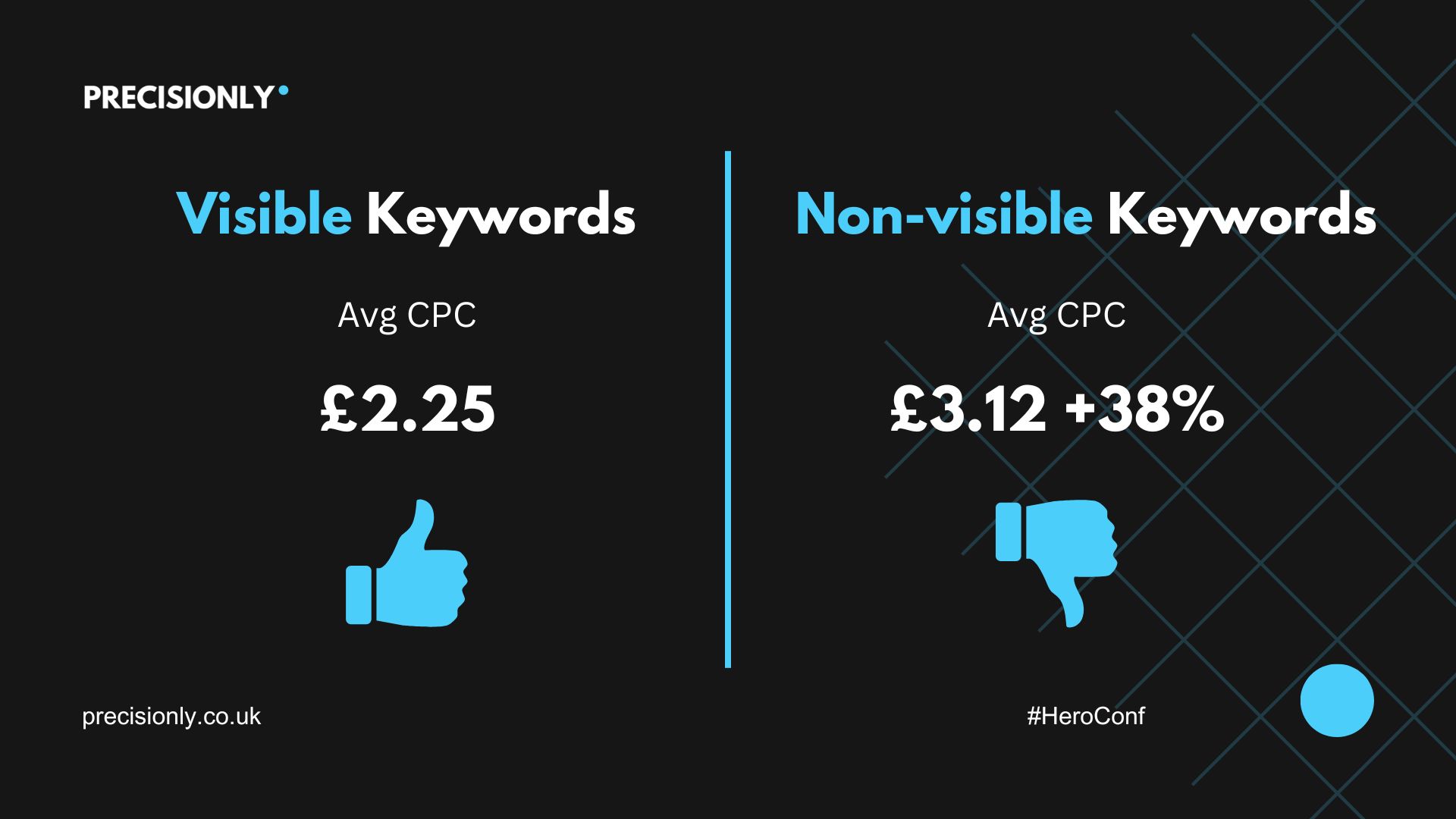
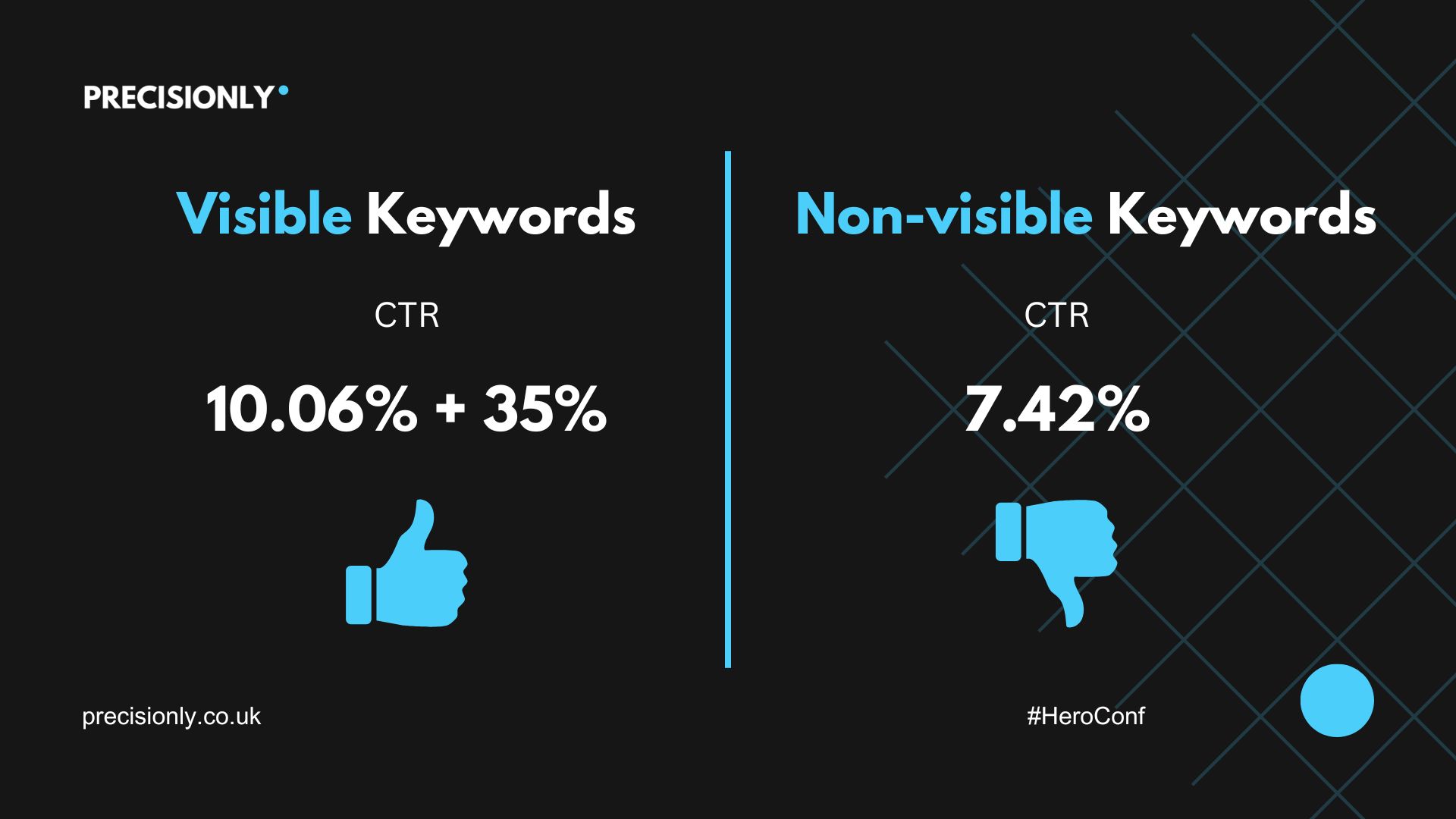
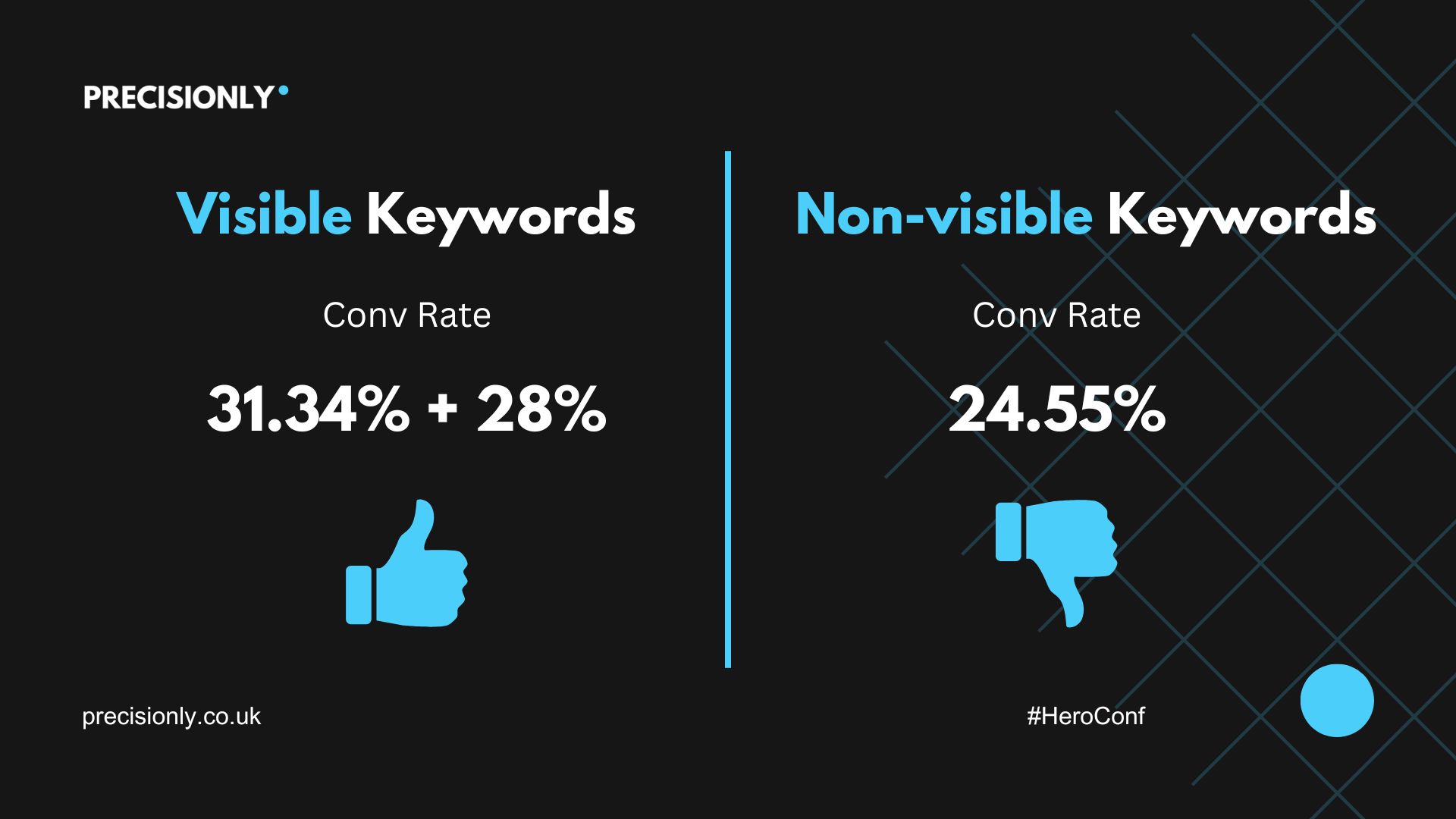
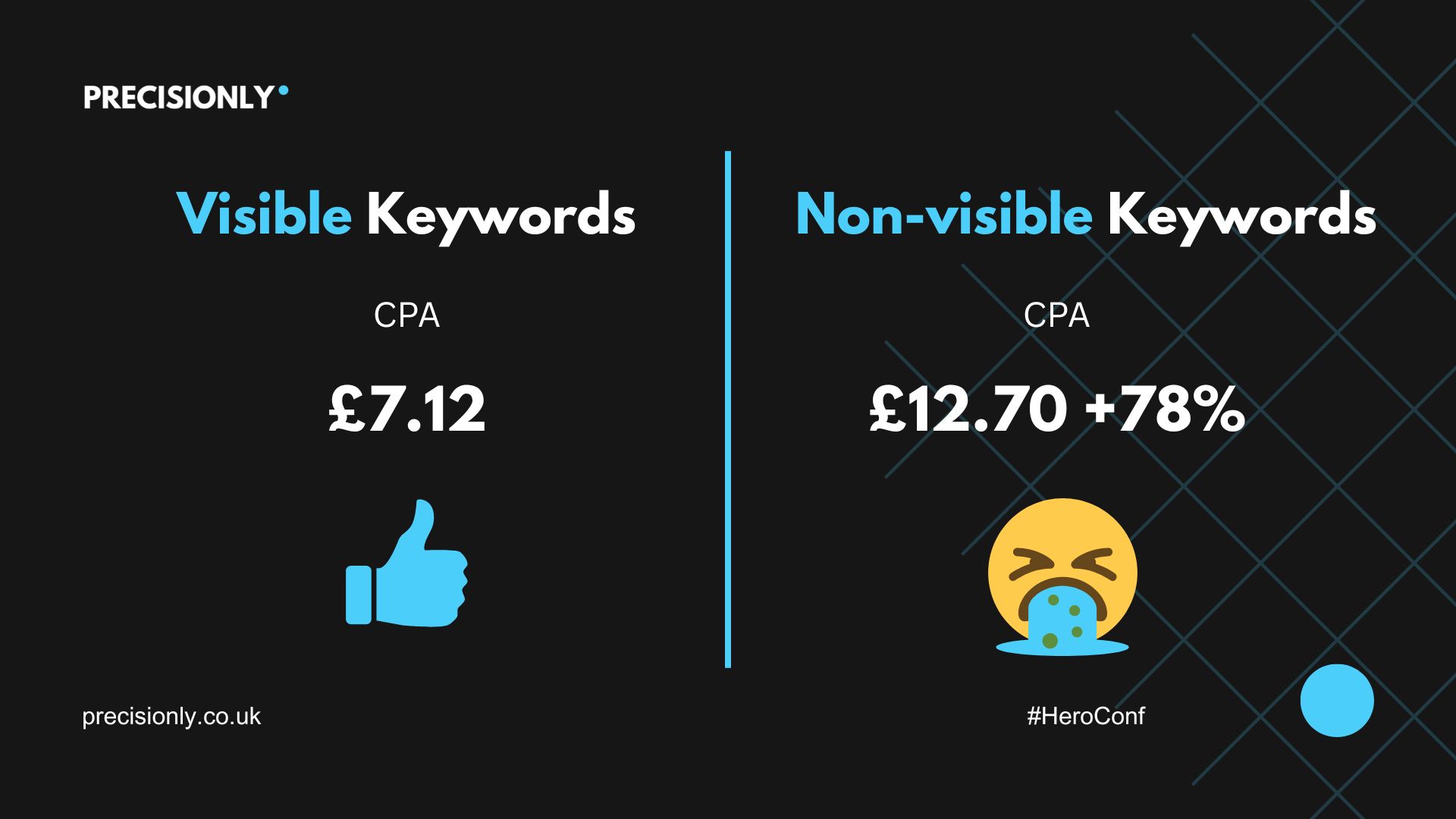
The challenge is not simply that some search terms are hidden from reporting. The concern is how they appear to behave. The data discussed during the session highlighted several noticeable differences:
– Hidden search terms generated 38% higher CPCs
– Hidden search terms showed a 35% lower click-through rate
– Hidden search terms produced significantly higher CPAs
– Higher CPCs combined with lower engagement creates a compounding effect.
If users are searching for less relevant or broader topics, advertisers can quickly find themselves paying more for traffic that is less likely to convert. This becomes increasingly difficult because the data available to identify and control those issues becomes smaller.
The challenge is not simply that some search terms are hidden from reporting. The concern is how they appear to behave. The data discussed during the session highlighted several noticeable differences:
– Hidden search terms generated 38% higher CPCs
– Hidden search terms showed a 35% lower click-through rate
– Hidden search terms produced significantly higher CPAs
– Higher CPCs combined with lower engagement creates a compounding effect.
If users are searching for less relevant or broader topics, advertisers can quickly find themselves paying more for traffic that is less likely to convert. This becomes increasingly difficult because the data available to identify and control those issues becomes smaller.
Moving From Reactive To Proactive Negative Keyword Management
Many accounts still treat negative keyword management as a maintenance task. Campaign launches happen. Traffic starts flowing. Weeks later somebody downloads a search terms report and removes anything obviously irrelevant. The issue with this approach is that the spend has already happened.
A proactive approach aims to prevent wasted spend before campaigns launch.
This can include:
– Building category-specific exclusion lists
– Identifying informational intent patterns
– Analysing competitor themes
– Creating repeatable review processes
Negative keywords should not rely on memory or occasional account clean-up. Processes generally outperform good intentions.
A proactive approach aims to prevent wasted spend before campaigns launch.
This can include:
– Building category-specific exclusion lists
– Identifying informational intent patterns
– Analysing competitor themes
– Creating repeatable review processes
Negative keywords should not rely on memory or occasional account clean-up. Processes generally outperform good intentions.
Practical Tactics Shared During Hero Conf
The session also covered several practical approaches advertisers can implement immediately.
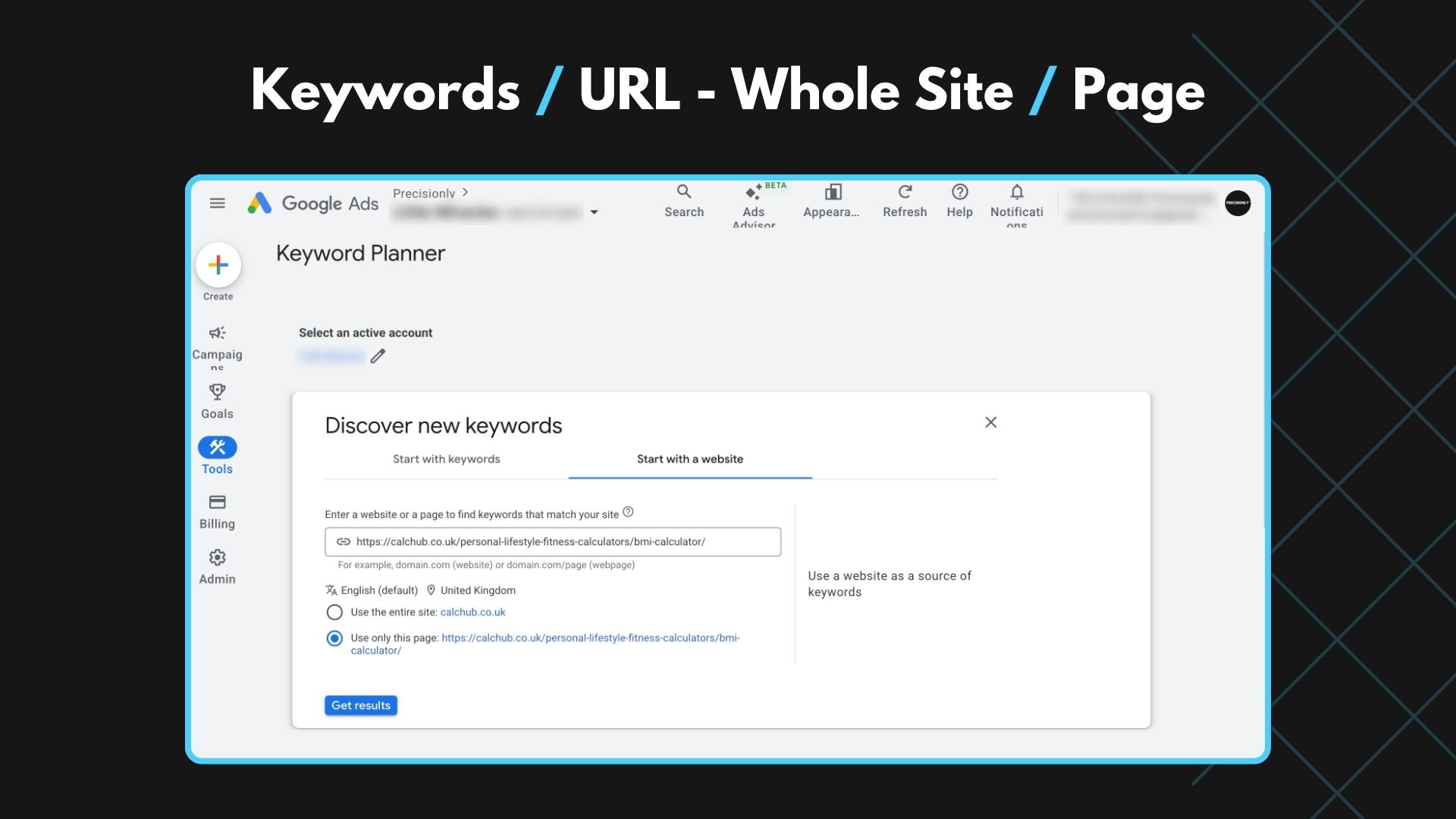
Using URLs with Keyword Planner
Many advertisers only use Keyword Planner for finding opportunities. It can also be useful for identifying irrelevant intent. By analysing landing pages and competitor pages, themes and search patterns often emerge that can later become negative keyword opportunities.
Don’t wait for these keywords to show up in your search terms report (or potentially hidden in the “other” category) proactively add them as negatives now.
Using URLs with Keyword Planner
Many advertisers only use Keyword Planner for finding opportunities. It can also be useful for identifying irrelevant intent. By analysing landing pages and competitor pages, themes and search patterns often emerge that can later become negative keyword opportunities.
Don’t wait for these keywords to show up in your search terms report (or potentially hidden in the “other” category) proactively add them as negatives now.
Account-Level Lists
Repeatedly adding the same negative keywords across campaigns creates unnecessary work and introduces inconsistency. Account-level lists help standardise exclusions across larger accounts.
Repeatedly adding the same negative keywords across campaigns creates unnecessary work and introduces inconsistency. Account-level lists help standardise exclusions across larger accounts.
MCC-Level Lists
For agencies or businesses managing multiple accounts, MCC lists can help apply broader exclusions across all accounts from a single location.
Work in specific industries or niches? Creating and one click implementing proven negative keyword lists straight into new client accounts for super-quick wins/efficiencies.
For agencies or businesses managing multiple accounts, MCC lists can help apply broader exclusions across all accounts from a single location.
Work in specific industries or niches? Creating and one click implementing proven negative keyword lists straight into new client accounts for super-quick wins/efficiencies.
A recurring theme throughout the presentation was efficiency and, more specifically, how small inefficiencies can quietly build over time.
PPC accounts rarely struggle because of one major mistake or a sudden dramatic drop in performance. More often, performance gradually becomes less efficient through a combination of smaller factors. A little wasted spend on irrelevant searches, slightly weaker search intent entering campaigns, broader matching introducing lower quality traffic or campaign expansion happening without sufficient control. Individually, these often appear minor and can easily be overlooked. Combined, they can become expensive.
The same principle works in reverse. Small improvements also compound. Protecting even 5-10% of spend can create additional room for stronger search terms, more testing opportunities and more confident scaling decisions. Over time, those incremental gains can become meaningful.
The businesses that scale PPC most effectively are rarely the ones chasing every new recommendation or platform feature. More often, they are the businesses consistently paying attention to the details and building repeatable processes that protect performance over the long term.
Check out the complete Hero Conf presentation here.
PPC accounts rarely struggle because of one major mistake or a sudden dramatic drop in performance. More often, performance gradually becomes less efficient through a combination of smaller factors. A little wasted spend on irrelevant searches, slightly weaker search intent entering campaigns, broader matching introducing lower quality traffic or campaign expansion happening without sufficient control. Individually, these often appear minor and can easily be overlooked. Combined, they can become expensive.
The same principle works in reverse. Small improvements also compound. Protecting even 5-10% of spend can create additional room for stronger search terms, more testing opportunities and more confident scaling decisions. Over time, those incremental gains can become meaningful.
The businesses that scale PPC most effectively are rarely the ones chasing every new recommendation or platform feature. More often, they are the businesses consistently paying attention to the details and building repeatable processes that protect performance over the long term.
Check out the complete Hero Conf presentation here.
Ready to find (then eliminate) the hidden waste in your account?
Get a Precision Audit, a concise, expert review highlighting inefficiencies and missed opportunities in your PPC setup.
